Years ago I used to work on the Beefeater Gin business in the UK. It’s where I first came across the phrase Dutch Courage. It goes back to the British army who, many years ago, would issue a portion or two of Gin to the troops before they charged off into battle. Gin is made with juniper berries and juniper berries came from Holland. Well Holland to me, but more rightly The Netherlands – the place where the Dutch live. OK, so they possibly have three identities.
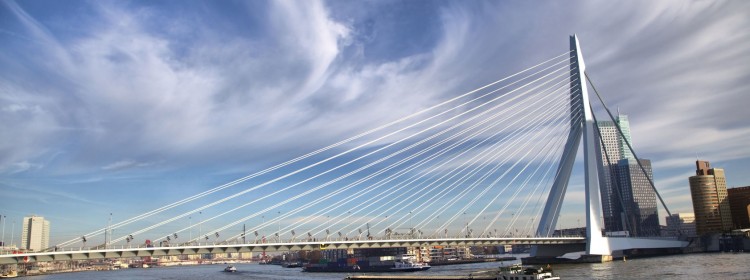
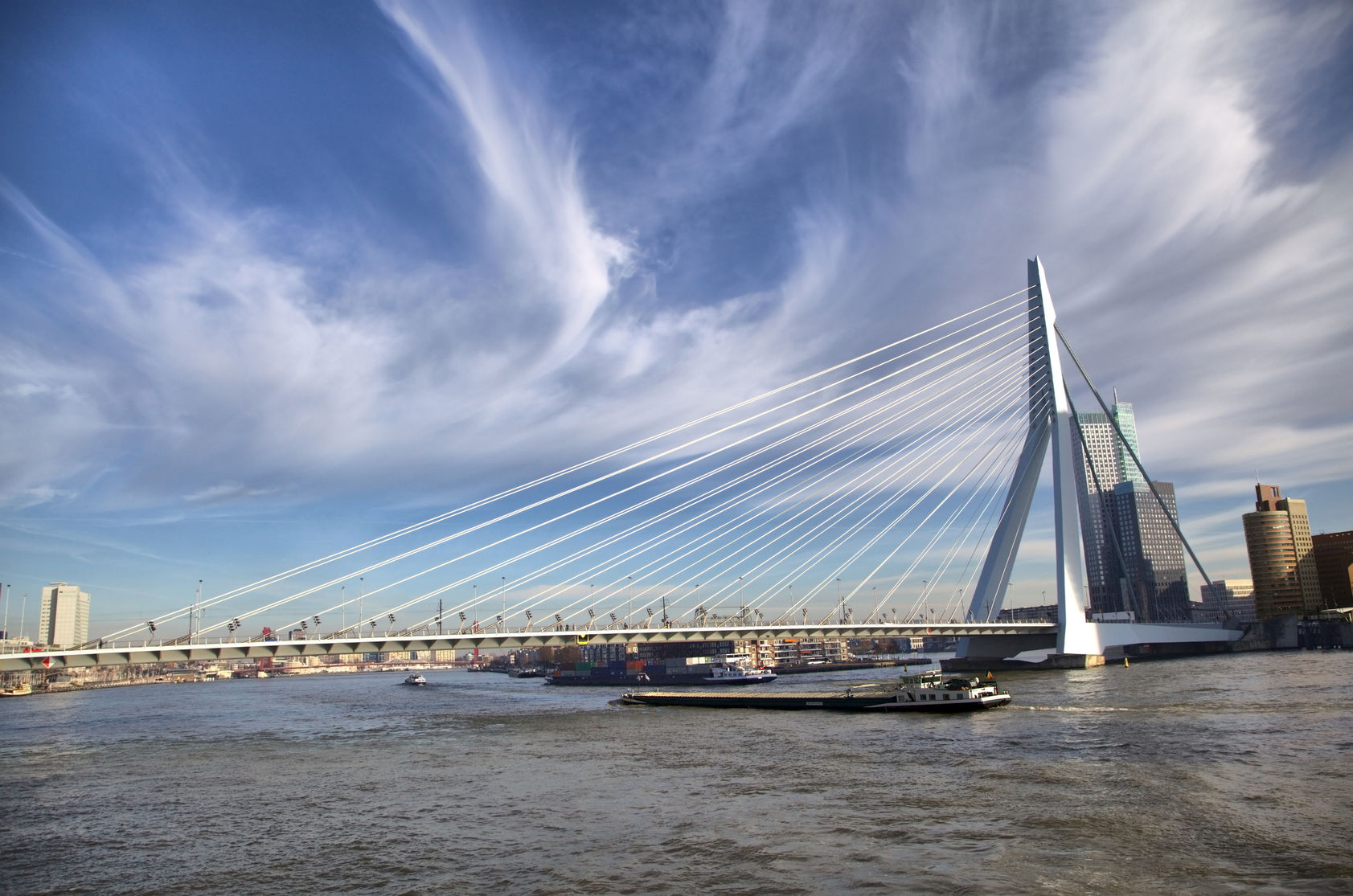
Now I know The Netherlands pretty well. We have a very active and growing UP member base there and the thing I like is that it seems you can get pretty much anywhere in the country within 45 minutes by train. I’ve been to Amsterdam a lot but never Rotterdam. Where? Yes, Rotterdam, the un-sung second city that everyone kind of overlooks. Well, if you get a chance, check it out – things are happening. I’ve just spent a day there and it’s a cool, happening, city with more of a business beat than most places and an impressive skyline.
Rumour is that the folks from Boston’s Cambridge Innovation Centre (CIC) have been checking out Roffa (as some street slang calls the city) as a potential European base. That puts it in competition with cities like London, Amsterdam and Berlin etc. so the city is punching above its weight. But it has a good list of assets such as a strong Life Sciences, Medical, Food and Cleantech offering; the Erasmus University and Medical Center and The Technical University of Delft. Added to this it has some very cool new and renovated spaces for younger start ups at a more reasonable cost.
Thinking of the difference between Amsterdam and Rotterdam raises some interesting thoughts as well. As one friend, local resident and UP member, Don pointed out, if Amsterdam is the me, me, me approach (as in I amsterdam) then very much Rotterdam is about We rotterdam – as the city is all about working industriously together. Another viewpoint I picked up from a local coffee shop owner was ‘In Amsterdam they spend the money, in Rotterdam we earn it.’ Proud, industrious, lot this Roffa bunch.
Anyway, if you get a chance check it out. You won’t be disappointed.
Tourist bits
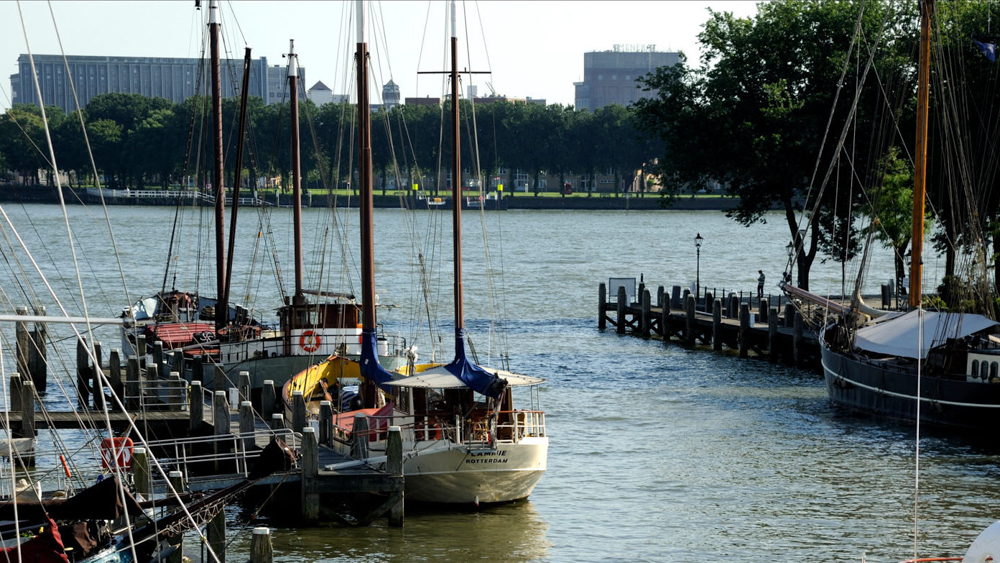
Not every night you get to stay on your very own boat in a harbour. Added to that the boat was a former dope smuggling boat. The Lammie is moored in a small basin off the Maas in downtown Rotterdam. So if you fancy breaking away from normal hotels for a few nights, and like the idea of being rocked to sleep, The Lammie is the perfect alternative location. Find it on Airbnb.
I’ve lived in Sweden a good few years now but my Swedish doesn’t appear to get much better. I speak what I call ICA Swedish (ICA being the name of the local grocery store, where I can make myself understood pretty well, but that’s about it).
One Swedish word I do know however is Lagom. It’s a word that is central to the Swedish psyche, and in fact pretty much everything else that has gone on in Sweden for the last few hundred years. It means just enough – but never too much. It’s about being average. Everyone being the same – equal. Now I’ve battled this word for a good number of years, as average is not really something I have an affinity for and I’ve come to the conclusion that Lagom is so embedded in the Swedish way of life, it can never be removed. Which is probably why they’ll never win a world cup – but that’s another story.
In my work with cities and place branding I find that far too often most places are Lagom in the way they approach their marketing. The positioning of cities, what they stand for, is key in their successful marketing. Too many places end up doing something average, creating what I call wallpaper positioning – trying to be all things to everyone and in so doing achieve and stand for very little.
Cardiff, the capital of Wales, is certainly not a lagom city. I was recently asked to be a keynote speaker on City Branding at the Capital City Vision Event in Cardiff (www.cdffuture.com/page/programme/). They asked me to talk about my experience with the branding and marketing of Stockholm and other places.
I realised I had not been to Cardiff in well over 20 years and when last there it was not particularly a city I had looked forward to visiting. Wales was a place I knew well however, having spent many holidays on the west coast, Cardigan Bay. Added to this my grandmother, now sadly no longer with us, was Welsh. She was from the valleys. So, in the words of Granny Stubbs, ‘I had a bit of an affliction for Wales’.
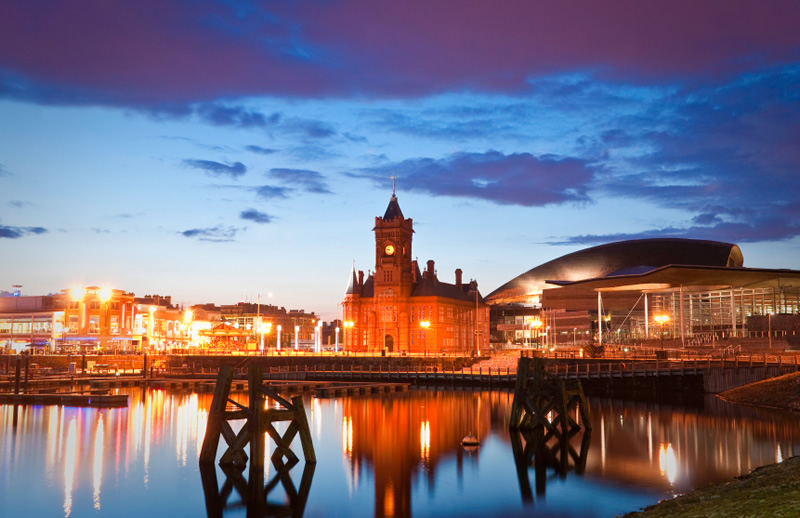
So back to Cardiff. What a spectacular difference to the city of my youth. Modern Cardiff is a welcoming and interesting place with a dramatically changed architecture from when I knew it. The millennium Stadium is spectacular. It looks like something from another planet, that has been dropped from the mother ship to fit perfectly into the centre of the city. I walked round all sides of it in awe. Built for the 1999 Rugby World Cup, it’s hosted many other great sporting events, including one of the most memorable FA Cup Finals ever, between Liverpool and West Ham (which after extra time and a 3-3 score, ended up with Liverpool winning on penalties). There are several things I really like about the Millennium Stadium. One being that it’s right slap–bang in the centre of the city. It gives it a very special feeling, for such a major stadium. The other thing I love is the cost – at somewhere under 150 million pounds, it makes Wembley Stadium, which cost closer to 750 million, look incredibly expensive and actually a waste of money. I know which I prefer.
The list of other dramatic new architecture in the city is impressive as well – the Millennium Centre, Richard RogersSenedd(or Welsh Senate building) and the fantastic new Cardiff Bay Development. By 2018 the new BBC Wales head office will house 1200 staff right in the very heart of the city. Today the city is already home to many well known BBC productions, most notably Dr.Who (check out the Dr Who Experience if you’re into Daleks).
Dr Who.Made in Cardiff
I had my family with me and we walked the city streets one evening looking for a good restaurant and we were spoilt for choice (we eventually chose a Brazilian restaurant called Viva Brazil, where the Passadors, or meat carvers, move from table to table, offering fifteen different cuts of meat.)
Walking through The Hayes and around the St Davids Centre the choice and variance of restaurants and food is spectacular and again a far cry from the fish and chips city of my youth.
Cardiff Bay development.
Eric Kuhne.
The St Davids Centre development is by renowned architect Eric R. Kuhne and his company Civic Arts. The centre combines leisure, retail, entertainment, office, and residential spaces into a vibrant new centrepiece in the very heart of the city. I had the huge good fortune that Eric was one of the other keynote speakers on the platform with me in Cardiff and what a speech it was covering as a professional many of the things I appreciate about good urban thinking and design. Eric is the founder of Civic Arts which he describes as ‘a research and design practice dedicated to rediscovering the pageantry of civic life‘. Civic Arts is currently building both mixed-use and specialised projects on four continents, from urban regeneration schemes to entire city master plans. He believes that ‘the city has been, and always will be, the ultimate ‘Marketplace of Ideas.’ As a city person it’s sentiment I can easily embrace.
It was a true pleasure to listen to Eric’s speech and share the same platform as such an urban visionary.
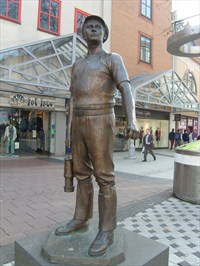
The Miner by local sculptor Robert Thomas, is a reminder of the sweat and blood that the city of Cardiff is built upon. It makes the point wonderfully well of how very different, and comparatively easy, our modern day life is.
Tim Williams CEO of The Committee for Sydney
Another key participant at the Capital City Vision Event, was Tim Williams – CEO of The Committee for Sydney. Tim, a proud Welshman, was formerly CEO of the Thames Gateway London Partnership where he made the Gateway in East London the key urban regeneration project for London and indeed the UK. Tim is recognised as one of the leading urban renewal thinkers and practitioners at work in the field, with an international reputation.
Tim’s brilliant speech focused on the future of cities. People are flocking to cities and most interestingly back to city centres. The dream of our parents and grand parents of living in suburbia is in full reverse. Thirty years ago inner cities had connotations of being dangerous, low quality slum districts but today more and more people want to live in the heart of cities. The easy access to amenities, connectivity and being able to conduct daily life in a simpler, lower cost way are some of the major drivers. These new urbanites offer many benefits to society as well, such as reduced carbon footprint as daily commutes are impacted and with people living in smaller city centre accommodation.
Bright Flight
These people are educated and seeking knowledge based jobs as well. This phenomenon is what the demographer William Frey has in mind when he says “A new image of urban America is in the making. What used to be white flight to the suburbs is turning into ‘bright flight’ to cities that have become magnets for aspiring young adults who see access to knowledge-based jobs, public transportation and a new city ambiance as an attraction.”
The point is to ensure you have some of what attracts ‘bright flight’: walkable urbanism.
And it’s not just the young. Interestingly the baby boomers, who are now approaching retirement age, are seeking easier, lower cost, life styles with their larger homes in the suburbs now costing them more time and effort to maintain and heat. City centre living also reduces the need for cars. This means cities need efficient, good quality, public transportation systems as well as offering walkable urbanism.
Place Branding: The Drivers and Issues
My own speech in Cardiff focused on three aspects of developing a strong city brand. Firstly I looked at some of the drivers for city branding such as the attraction of tourists, inward investment as well as new tax paying residents. Place and city branding is one of the most complex marketing tasks that can be undertaken and has to involve a high degree of stakeholder contact. Identifying and involving the key stakeholders is central to any place branding strategy. Finally I looked at positioning, which goes to the very heart of place branding. Here I referenced my own work for the city of Stockholm and its positioning as The Capital of Scandinavia. The art of marketing is the art of branding. The art of branding is the art of positioning. What do you stand for and represent? I play a little game of asking people what one word they would use to describe a city. It’s one of the most challenging questions to answer for any brand and goes to the heart of positioning.
Place branding has grown enormously in the last ten years and as one place markets itself, very other place has to. Many of the disciplines of consumer marketing apply however to place branding. Like a traditional brand, places need to develop long term strategies. These should have a ten and twenty year perspective and not change with every political cycle. This means politicians need to be engaged early on and the strategy needs to have cross political party agreement to have a long term future. Stockholm’s has been in place now over ten years and has been through different political administrations successfully.
Building strong place brands can have a remarkable impact on cities. Just take the case of Barcelona. Today it is seen as one of the world’s most successful cities. However, it was all very different forty years ago. In the 1975 series Fawlty Towers Manuel, the hapless Spanish waiter who lived in fear of Mr Fawlty, was cast as coming from Barcelona. His home town was chosen with great care – as at that stage Barcelona was considered by many foreigners to be a run down, dirty, industrial black hole. It wasn’t until the death of Franco in 1975, that a new regional focus was put in place to get the city back on a path to regeneration. One of the key springboards in the strategy was the winning, and hugely successful staging of, the 1992 Olympic games, Barcelona is one of the few destinations to have run an Olympics at a profit. More than most places, the case of Barcelona proves that it is possible to turn around the fortunes of a city given the right strategy, a high degree of stakeholder involvement, focus and – most importantly – investment.
The Barcelona case was I felt relevant to my Cardiff presentation. Cardiff has been through a remarkable transformation since my youth. It’s already impressive. But the UK needs to embrace a more decentralised approach. London still dominates but turning the UK’s regional cities into new economic power houses would have tremendous benefits for the entire UK economy.
I was asked what one word I would use to describe Cardiff and spontaneously I replied passion. It’s a city with genuine passion and pride. You can feel it in meeting the local people and politicians. Lagom? Certainly not. Cardiff is a place that deserves to succeed and stand out. As the Capital city of Wales it also has a gravitas that most cities can’t match.
Cardiff has yet more potential to offer and I believe the best is yet to come. Granny Stubbs, my Welsh grandmother, would be proud.
—————————————————————–
Watch an extract from the Capital City Vision speech here:
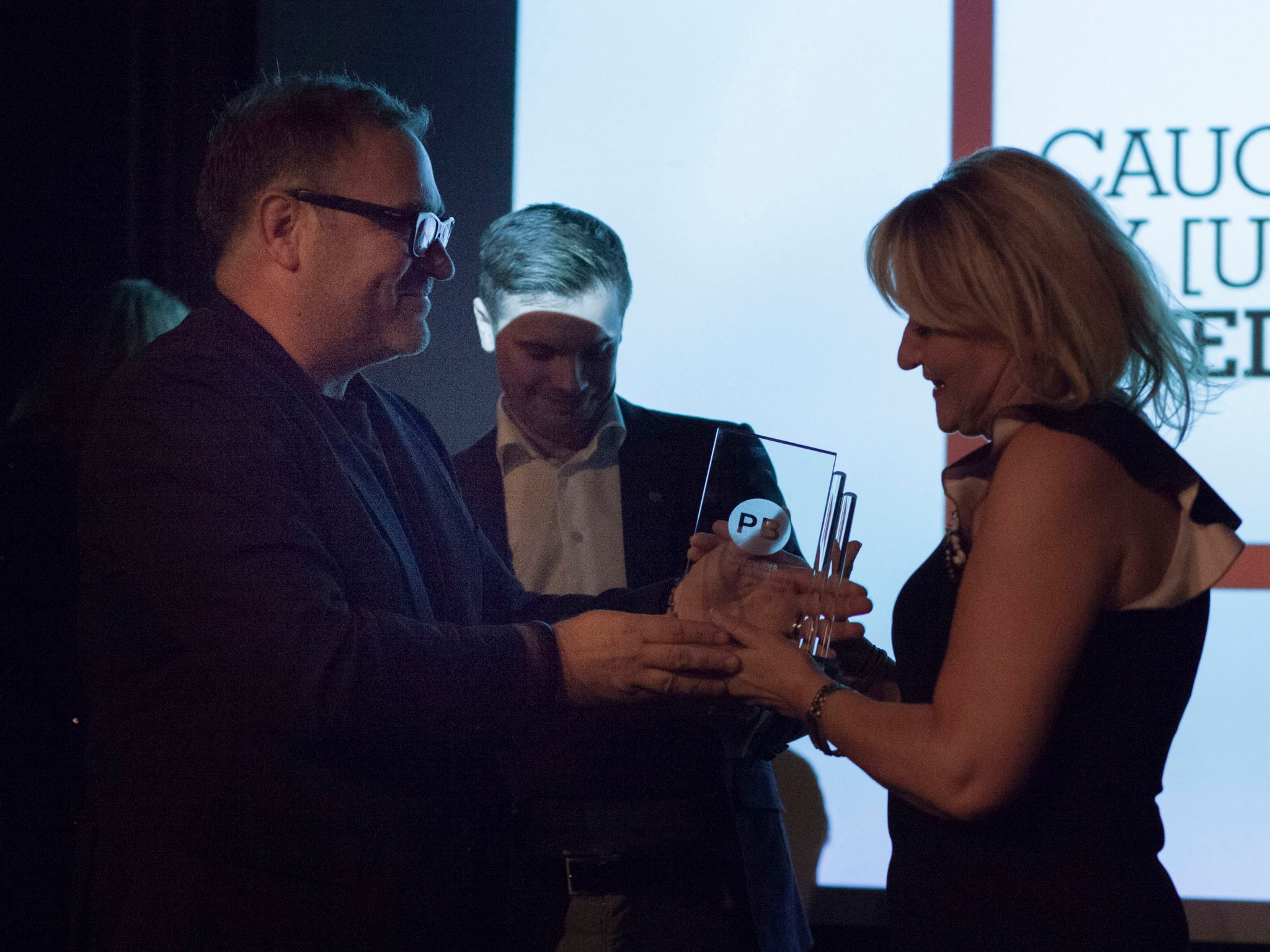
I was recently fortunate enough to one of the judges on the PlaceBrander of the year awards in Sweden. The ceremony event was held at the very modern and stylish Copperhill Mountain Lodge resort in Åre, Sweden. The very worthy winner of the event this year was Umeå, which is the European Capital of Culture.
It was interesting in reviewing the various entries from around Sweden and to reflect on what made for an outstanding entry.
The official criteria, which are extremely valid, were a Place Branding project that led to the growth of the destination in terms of tourism, inward investment, residential growth or an increase in activity such as congresses and exhibitions.
The three things I look for
But what more was I looking for as a judge? What else was important to see that went beyond these initial worthy criteria?
1. One of the striking things is that too many place branding activities are ‘campaign focused’. Campaigns in my mind tend to be too short term. Places are difficult things to market and create strong brands for. Branding takes time and a campaign tends to be a shorter term, one off, event. I think part of the issue is that traditional advertising agencies themselves are very campaign oriented. Traditional advertising agencies aren’t terribly good at dealing with the greater complexity that Place Branding really demands.
Equally the place or destination itself needs to clearly identify goals with definable long term strategic objectives. What is the place trying to achieve? What are their goals in terms of either inward investment, tourism or residential growth. Too often these are missing and even when present, tend to be expressed in generalities. Each place is different and demands a different, long term, set of objectives.
2. Once these longer term goals and objectives are identified the focus should be on creating a really distinct positioning. The art of marketing is the art of branding. The art of branding is the creation of a distinct positioning. Being number one in your chosen category. It is the hardest thing to get right. We did it wonderfully well with the work we did for Stockholm – as The Capital of Scandinavia. A simple and clear proposition. A distinct positioning means being just that – distinct. You can’t be all things to all people. You need to stand for something and that will probably lead to some people not liking it. But if you produce wallpaper that doesn’t stand out, odds are you won’t offend anyone- but equally you won’t stand out either.
3. Communications that really communicates. Beyond the branding elements I obviously look at the communications thinking and increasingly a good mix between traditional media and activities and social media use. I think nearly all places and destinations engage in some form of social media activity nowadays, but unfortunately too much of it is disjointed and sporadic. The world of marketing has been turned on its head in the last ten years and nowadays customers are in control of what they want to see and experience. They can get more information, and form opinions about places, and brands, without ever looking at your website or following your social media posts. The whole focus nowadays should be built around attracting the right customers to seek you out and the way you do that is with great quality Content and strong Inbound Marketing programmes. If you are not using this approach in your marketing yet, odds are you are producing lots of content but it is probably being wasted, and measurement of results is not being utilised to refine messaging and campaigns. The key is creating great quality content, without it being overly sales oriented. It firstly needs to be great quality content on a topic. Approach it as you would a relationship with a person. On the first date you don’t normally offer to get married and have kids. You get to know each other and gently build the relationship. It’s like that with marketing and especially content and inbound.
If you have not yet started thinking about Inbound, give us a call or visit the Inbound page on the UP THERE, EVERYWHERE website. We have teams of Inbound experts globally who can advise and help.
www.upthereeverywhere.com/inbound-marketing-services/
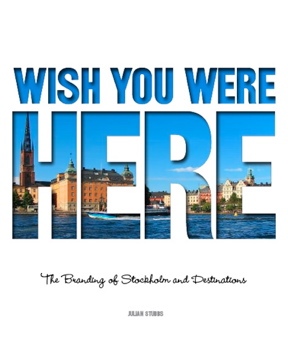
THE FOLLOWING EXTRACT IS TAKEN FROM THE BOOK WISH YOU WERE HERE– THE BRANDING OF STOCKHOLM AND PLACES, BY JULIAN STUBBS. AVAILABLE ON AMAZON.
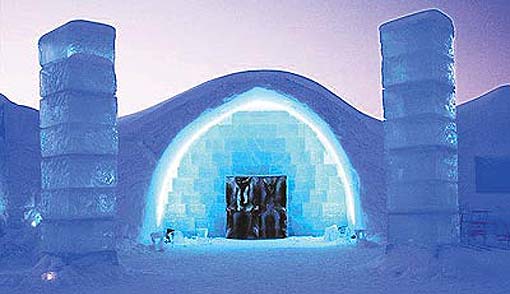
The Ice Hotel
Getting people to visit a destination that lies above the Arctic Circle in the middle of winter and then pay a premium price for the privilege has to be seen as a truly great marketing achievement. But that’s exactly what The Ice Hotel in northern Sweden has achieved.
In 1992 an ice seminar was organised by Yngve Bergqvist, who was looking at ways to improve tourism in his home town of Jukkasjärvi, which lies around 17 kilometers from Kiruna in northern Sweden. An igloo of some 60 m2 containing ice sculptures was built to house the event. Unfortunately accommodation at the hotel Yngve managed had run out and so some hardy individuals agreed to spend the night in the igloo. They slept on top of reindeer skins in sleeping bags and the next morning, by way of compensation I should imagine, were given certificates to prove they had done so.
Twenty years later the Ice Hotel brand has spread and now there are ice hotels in sev- eral countries as well as a successful Ice Bar franchise with Absolut Vodka.
The hotel in Sweden is constructed every December and lasts through to the following April, when it melts. Each Spring, around March, 10,000 tons of ice are cut from the frozen Torne river to store for building the following winter’s hotel as well as for creating the unique products that the hotel markets, such as glasses and sculptures made of ice.
Whenever people or organisations com- plain about the difficulties they face in attract- ing people to their particular destination, I like to use the Ice Hotel as an example. Despite severe difficulties, any place, given enough focus on what they have that is truly special and some creative thinking, can succeed.
Few Place Marketing stories can be as inspirational as the one concerning The Ice Hotel in northern Sweden.
LuLeå university; Great Ideas Grow Better Below Zero.
Promises to be a good week if you are interested in Content and Inbound with HubSpot hosting INBOUND 14 in Boston. Lots of interesting topics and keynotes including Simon Sinek, Guy Kawasaki and Martha Stewart. Entertainment provided Wednesday night by Janelle Monae. Should be a fun and interesting week.